
HIDDEN GEMS OF UGANDA
Discover the Blue Lakes of Rubirizi
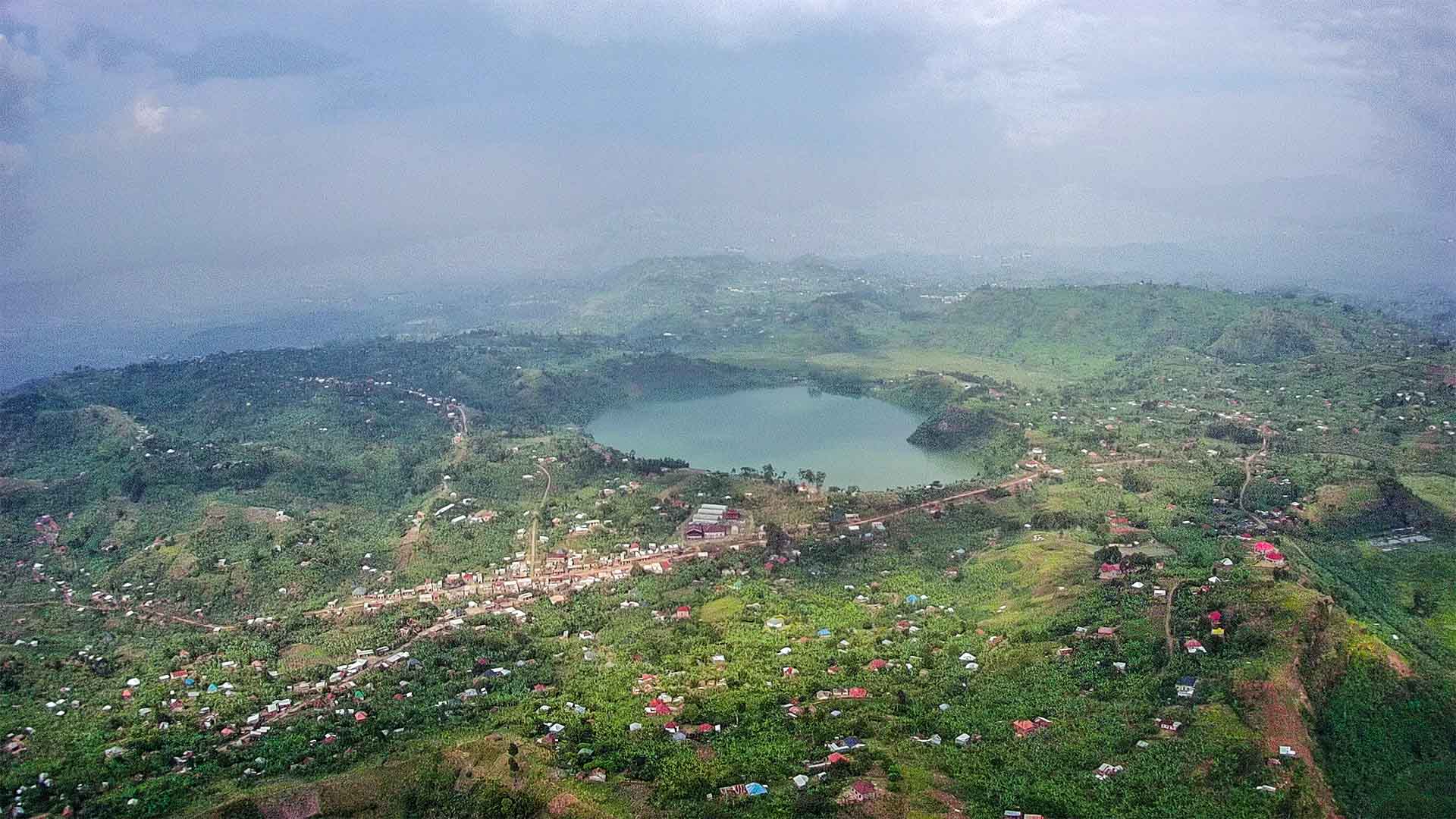
Explore the mystical crater lakes of Western Uganda, where volcanic history, folklore legends, and breathtaking turquoise waters create one of Africa’s most extraordinary natural wonders.
Nestled in the heart of Western Uganda’s Rift Valley, the Rubirizi District harbors one of East Africa’s best-kept secrets: a stunning collection of crater lakes whose vivid blue and turquoise waters have captivated travelers for centuries. These volcanic jewels, formed thousands of years ago, offer visitors a rare combination of natural beauty, cultural heritage, and mystical folklore unlike anywhere else on the African continent.
What Makes Rubirizi's Lakes So Special?
Rubirizi District, carved out of Bushenyi District in 2010, sits along the western arm of the East African Rift Valley — one of the most geologically active regions on Earth. This prime location has blessed the district with an astonishing 56 volcanic craters, of which 32 are filled with water, creating a mesmerizing landscape of emerald hills dotted with jewel-like lakes in every shade of blue imaginable.
What sets Rubirizi’s crater lakes apart from the hundreds of others scattered across Uganda is their unique character — from Lake Kamunzuku’s legendary crystal-clear transparency to the twin lakes of Kamweru and Kyema (the only conjoined crater lakes in Africa), to Lake Nkugute whose shape mysteriously mirrors the African continent itself. These aren’t just pretty lakes — they’re living museums of geological history, cultural heritage, and natural wonder.
The Volcanic Origins: How Were These Lakes Formed?
The crater lakes of Rubirizi were born from fire and fury between 8,000 and 10,000 years ago during a period of intense volcanic activity in the Bunyaruguru Volcanic Field. Unlike the cone-shaped volcanoes most people imagine, these eruptions created explosion craters — violent volcanic fissures that ejected lava, ash, and rocks across the landscape, leaving behind deep, circular basins.
Over thousands of years, these basins gradually filled with rainwater, underground springs, and seasonal runoff, transforming the scars of ancient catastrophe into the serene, shimmering lakes we see today. The same volcanic forces that created the Rwenzori Mountains and the famous Kitagata Hot Springs in neighboring Sheema District were responsible for sculpting Rubirizi’s dramatic landscape.
The mineral content of the volcanic rock beneath these lakes is what gives many of them their distinctive colors — from deep sapphire blues to emerald greens to the supernatural turquoise of Lake Kamunzuku. The presence of sulfur, copper, and other minerals, combined with the depth of the water and the angle of sunlight, creates a constantly shifting palette that has earned these lakes their reputation as some of the most photogenic in Africa.
The Magnificent Lakes of Rubirizi
While Rubirizi boasts 32 crater lakes, several stand out as must-visit destinations for travelers seeking Uganda’s hidden natural treasures:
Lake Nkugute: 'Lake Africa'
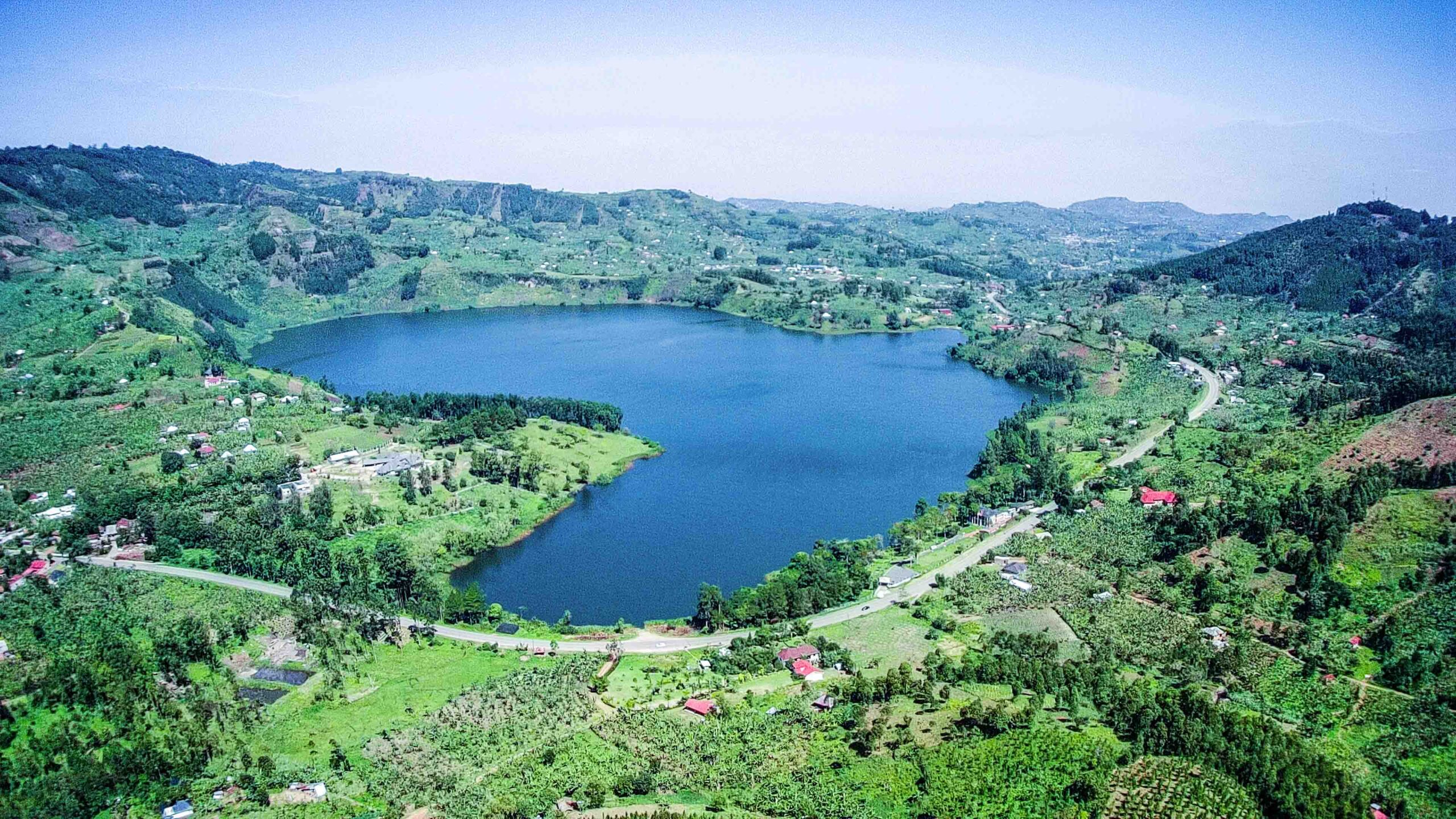
Perhaps the most famous of Rubirizi’s crater lakes, Lake Nkugute has earned the affectionate nickname “Lake Africa” thanks to its uncanny resemblance to the shape of the African continent when viewed from the surrounding hillsides. This geographical quirk has made it a pilgrimage site for photographers and geography enthusiasts from around the world.
The Name: “Nkugute” comes from the Runyaruguru word meaning “to swallow,” rooted in ancient folklore that claimed the lake demanded the sacrifice of one boy and one girl each year. While this myth has long been dispelled, the name stuck, and the lake’s mystical reputation endures.
What Makes It Special:
- Sits at an elevation of 4,645 feet (1,416 meters) above sea level
- Claimed by locals to be the deepest crater lake in Africa (though unverified by scientific measurement)
- Surrounded by banana plantations, mahogany trees, and pine forests
- Visible from the Mbarara-Kasese highway, making it easily accessible for travelers heading to Queen Elizabeth National Park
- Now serves as a vital water source for Rubirizi District, with a dam constructed at its boundary
Folklore & Legends: For centuries, Lake Nkugute was tended by a spiritual caretaker called Omuzumira Komurusozi, who performed annual rituals to appease the lake’s gods. These ceremonies involved sacrificing a goat and sheep, whose heads were ceremonially cast into the waters. When the rituals were delayed, locals believed the lake would “turn violent,” leading to mysterious drownings. With the arrival of Christianity in the region, these traditional practices were abandoned, though stories of the lake’s supernatural power continue to be whispered around evening fires.
The Twin Lakes: Kamweru & Kyema
Located in Magambo Sub-county, Lakes Kamweru and Kyema hold a unique distinction: they are the only conjoined crater lakes in Africa. Connected by a narrow valley that cross-cuts between them, these twin lakes share water through an underground cave system, creating a hydrological marvel that has fascinated geologists and local communities alike.
The Heritage Cave: The most remarkable feature of Lake Kamweru is the heritage cave nestled beside it. According to local elder Daniel Katugano (whose father migrated to the area in 1797), this cave played a crucial role in the lake’s formation. In the 1930s, water from the nearby Nzuguto wetland mysteriously “transferred” into the Kamweru crater through underground channels in the cave, creating the lake and tragically drowning many people who lived in the crater basin.
Local legend speaks of Endyoka Mukama we Nyanja (“Endyoka, King of the Lake”) — heavy water waves that passed through the soil via the cave to fill the Kamweru crater. Modern geologists explain this phenomenon more prosaically: volcanic fault lines created underground channels that allowed water to flow from Nzuguto to Kamweru, but the result was no less dramatic.
Historical Significance: During Uganda’s turbulent years under Idi Amin and Milton Obote, and later during the NRA bush war of the 1980s, the Kamweru heritage cave served as a hiding place for local communities. Families would prepare food early in the morning and hide in the cave for days while soldiers passed overhead, unaware of their presence. This cave, once used for spiritual sacrifices by the Bagesera clan (traditional owners of the lake), became a sanctuary for survival.
What You’ll Experience:
- Stunning green-blue waters contrasting with the surrounding lush vegetation
- Rich biodiversity: colobus monkeys, vervet monkeys, numerous bird species
- Nyanzibiri Eco-tourism site offering canoe rides, community wetland walks, and cultural experiences
- Each lake has its own depth and alkalinity, creating distinct ecosystems despite their connection
Lake Kamunzuku: 'The Transparent Lake'
Tucked away in the Kasyoha-Kitomi Forest Reserve, bordering the Kyambura Gorge on the outskirts of Queen Elizabeth National Park, Lake Kamunzuku holds a reputation as one of the most unusual crater lakes in Uganda — and possibly all of Africa.
The Mystery of Transparency: Lake Kamunzuku is known locally as “the transparent lake” due to its extraordinary clarity. According to community elders, the lake was even more transparent 20 years ago, drawing scientists and curious travelers who would attempt to descend to the lake’s bottom to discover the source of its crystal-clear waters — always unsuccessfully.
Several theories attempt to explain this phenomenon:
- The Mineral Theory: Rumors persist that untapped minerals — possibly gold or oil — lie beneath the lake, contributing to its unusual clarity
- The Reflective Basin Theory: The most scientific explanation suggests that the lake sits atop a shiny rock basement that reflects and magnifies sunlight, creating the transparent appearance
- The Pure Water Theory: The lake may be fed by exceptionally pure underground springs with minimal sediment
Location & Access: Lake Kamunzuku is approximately 6 hours’ drive from Kampala and about 1 hour from Queen Elizabeth National Park headquarters. The lake is surrounded by Kanyambogo to the north, Kyamuhanga Tea Estate to the south, and the Maramangambo and Kalinzu Forest Reserves to the southeast — making it an ideal addition to a western Uganda safari circuit that includes gorilla trekking in nearby Bwindi Forest National Park.
Other Notable Crater Lakes in Rubirizi
The Bunyaruguru Crater Field encompasses approximately 20 scenic crater lakes, many connected by local folklore and ecological relationships:
Lakes Katinda & Mirambi
These twin lakes hold cultural significance in Banyaruguru tradition — Katinda represents “female” and Mirambi represents “male” in local symbolism. They’re located just 10 minutes off the Mbarara-Kasese highway in Kichwamba village.
Lakes Nyungu & Rwizongo
Lake Nyungu carries its own dark legend: locals in the nearby Kasungu village believe it must “swallow” one person each year. These myths, while unproven, reflect the deep spiritual connection Banyaruguru communities maintain with their natural environment.
Lake Mafuro
Part of the greater Bunyaruguru crater field, Lake Mafuro offers serene waters surrounded by cultivated hillsides, providing insight into how local communities have adapted their agricultural practices to the crater landscape.
Things to Do: Experiencing Rubirizi's Crater Lakes
Visiting the crater lakes of Rubirizi isn’t just about admiring their beauty from afar — there are numerous ways to immerse yourself in this extraordinary landscape:
Traditional Canoe Rides
Glide across the tranquil waters in locally-crafted dugout canoes made by communities living near the lakes. As you paddle, watch for colobus monkeys swinging through the trees on the crater walls, vervet monkeys foraging along the shores, and a stunning variety of water birds including kingfishers, herons, and cormorants.
Available at: Lakes Kamweru, Kyema, and several others in the Bunyaruguru field
Nature Walks & Crater Rim Hiking
Trek through the lush forests surrounding the crater lakes, descending into valleys and climbing hills for panoramic views of multiple lakes at once. The trails pass through banana plantations, coffee farms, and remnant forest patches where you might encounter primates, reptiles, and dozens of bird species. Local guides share knowledge about medicinal plants and traditional uses of the forest.
Difficulty: Moderate to challenging (steep crater walls)
Photography & Scenic Viewing
The crater lakes of Rubirizi are a photographer’s paradise. The interplay of light on the vivid blue-green waters, reflections of surrounding vegetation, and dramatic crater walls create compositions that change throughout the day. Golden hour (early morning and late afternoon) offers particularly magical lighting as mist rises from the water’s surface.
Best viewpoints: Crater rim overlooks for Lake Nkugute, hillsides near Twin Lakes
Cultural Tourism with the Banyaruguru
Engage with the Banyaruguru community, descendants of Buganda exiles who settled in this region over 200 years ago. Learn about their unique culture, folklore, and traditional relationship with the crater lakes. Visit local homesteads, participate in traditional ceremonies (where appropriate), and hear firsthand the legends that have been passed down through generations around evening fires.
Experience: Traditional dance, storytelling, craft demonstrations, homestays
Bird Watching
The crater lakes and surrounding forests support a rich diversity of bird species similar to those found in nearby Queen Elizabeth National Park. Expect to spot African fish eagles, pied kingfishers, malachite kingfishers, African jacanas, great blue turacos, and numerous sunbird species. The crater environment creates unique microclimates that attract both forest and water birds.
Best season: Year-round; November-April brings Palearctic migrants
Fishing
Some of the larger, non-alkaline crater lakes support populations of tilapia and catfish. Sport fishing (catch and release) can be arranged through local guides. This offers a peaceful way to spend an afternoon while appreciating the crater environment. Check with local communities about which lakes permit fishing and any regulations in place.
Availability: Selected lakes; requires local permission and guide
The Banyaruguru People: Guardians of the Crater Lakes
No exploration of Rubirizi’s crater lakes is complete without understanding the Banyaruguru people — the indigenous community who have lived alongside these waters for over two centuries.
Origins & Migration: The Banyaruguru are descendants of Baganda exiles who fled the Buganda Kingdom approximately 200 years ago during the reign of Kabaka Ssemakookiro. Following a tragic fratricidal conflict, entire families were expelled westward, eventually settling in the highlands and crater-dotted landscape of what is now Rubirizi District (then called Bunyaruguru). Those with strength climbed into the hills; the weaker remained in lower valleys.
Today, elderly Banyaruguru still speak fluent Luganda in addition to Runyankole, preserving their Bugandan heritage while building a distinct cultural identity shaped by their crater lake homeland.
Spiritual Connection to the Lakes: For the Banyaruguru, crater lakes are not merely geographical features — they are spiritual entities requiring respect and reverence. Different clans held traditional responsibilities:
- The Bazumira Clan — Revered for their ability to locate bodies of drowning victims and perform water rituals
- The Bagesera Clan — Traditional owners and caretakers of Lake Kamweru, responsible for sacrificial ceremonies
- The Katugano Family — Keepers of oral histories dating back to the 18th century
While Christianity has largely replaced these traditional practices, the stories, legends, and deep connection to the land remain integral to Banyaruguru identity.
Getting There: How to Visit Rubirizi's Crater Lakes
Rubirizi District is located in southwestern Uganda, making it easily accessible as part of a Western Uganda safari circuit:
By Road from Kampala
Distance: Approximately 380-420 km (depending on specific lake destinations)
Duration: 6-7 hours by road
Route: Kampala → Masaka → Mbarara → Rubirizi (via Mbarara-Kasese highway)
The journey takes you through Uganda’s beautiful countryside, passing tea plantations, banana groves, and rolling hills. Lake Nkugute is visible from the main Mbarara-Kasese highway — look for its distinctive shape as you travel toward Queen Elizabeth National Park.
As Part of a Western Uganda Safari Circuit
Most visitors to Rubirizi’s crater lakes include them as part of a larger safari itinerary that combines:
- Queen Elizabeth National Park (30 minutes to 1 hour from various lakes) — Wildlife drives, Kazinga Channel boat cruise, tree-climbing lions in Ishasha
- Bwindi Impenetrable National Park (2-3 hours) — Mountain gorilla trekking
- Kibale National Park (3-4 hours) — Chimpanzee tracking and primate walks
- Rwenzori Mountains (2-3 hours) — Hiking in the “Mountains of the Moon”
Recommended Itinerary: 7-10 day Western Uganda Circuit including 1-2 days exploring Rubirizi’s crater lakes
Best Time to Visit
The crater lakes of Rubirizi can be visited year-round, but the experience varies by season:
Dry Season (June-September & December-February): Best overall conditions — clear skies, easier hiking on dry trails, better road access to remote lakes, ideal for photography with vibrant lake colors against blue skies. This is peak tourist season, so expect slightly higher accommodation rates.
Wet Season (March-May & October-November): Lush green landscapes, dramatic clouds and lighting for photography, fewer tourists, lower accommodation rates. Roads can be muddy and some lakes harder to access, but the scenery is at its most dramatic. Excellent for birdwatching as migratory species arrive.
Where to Stay
Accommodation options near Rubirizi’s crater lakes range from basic community campsites to comfortable lodges:
Community-Based Accommodation
- Nyanzibiri Eco-Tourism Site — Basic bandas and camping near Lake Kamweru. Community-run, budget-friendly, directly supports local families
- Community Campsites — Available near several lakes with basic facilities (pit latrines, no running water). Bring your own camping gear or hire from local operators
- Homestays — Arrange through local guides to stay with Banyaruguru families for an authentic cultural immersion
Nearby Lodges & Hotels
Most visitors stay at lodges near Queen Elizabeth National Park and make day trips to the crater lakes:
- Mweya Safari Lodge (Mid-Range to Luxury) — On Mweya Peninsula, 45 minutes from several crater lakes
- Katara Lodge (Luxury) — Perched on hills with panoramic views, 30-45 minutes from Twin Lakes
- Ishasha Wilderness Camp (Luxury) — In Ishasha sector, good base for southern crater lakes
- Bush Lodge (Budget to Mid-Range) — Just outside the park, affordable and comfortable
Practical Information & Travel Tips
Essential Tips for Visiting
🚗 Transportation: A 4×4 vehicle is strongly recommended, especially during wet season. Many crater lakes require driving on unpaved roads. Hire a local guide who knows the routes.
👟 What to Bring: Sturdy hiking boots (crater walls are steep), sun protection, insect repellent, reusable water bottle, camera with good zoom lens, binoculars for wildlife and bird viewing.
💰 Costs: Entry to most crater lakes is free, but you should hire local guides (USD 10-20 per day) to support communities and ensure you don’t get lost. Canoe rides typically cost USD 5-15. Cultural visits cost USD 10-30 depending on activities.
📱 Connectivity: Mobile network coverage is limited in many crater lake areas. Download offline maps before traveling. Inform someone of your itinerary if exploring independently.
🌍 Responsible Tourism: Respect local customs and traditions. Ask permission before photographing people or their homes. Don’t litter — carry all trash out with you. Support community tourism initiatives rather than independent exploration where possible.
⚠️ Safety: Crater walls can be slippery when wet. Don’t swim in crater lakes without local advice — some have steep drop-offs and strong underwater currents. Always hire guides when hiking to remote lakes.
📞 Contact: For guided tours and community tourism, contact Rubirizi District Tourism Office or Nyanzibiri Eco-Tourism Site. Your accommodation in Queen Elizabeth National Park can also arrange visits.
Why Rubirizi's Crater Lakes Deserve Your Visit
In a country blessed with extraordinary natural beauty, the crater lakes of Rubirizi stand out as something truly special. They represent the perfect intersection of dramatic geology, vibrant ecology, rich culture, and enduring mystery.
Unlike the crowded safari circuits of the Masai Mara or the commercialized game parks of East Africa, Rubirizi’s blue lakes remain refreshingly off-the-beaten-path. Here, you can stand on the rim of a volcanic crater and gaze down at turquoise waters that have barely changed since the Banyaruguru first settled these hills two centuries ago. You can paddle a traditional dugout canoe across waters shaped like the African continent itself. You can listen to folklore passed down through ten generations around an evening fire.
This is authentic Uganda — wild, mysterious, and unforgettably beautiful. And unlike so many of Africa’s natural treasures, it’s still waiting to be discovered.
Plan Your Visit to Rubirizi's Blue Lakes
Ready to discover one of Uganda’s best-kept secrets? Contact us to include the crater lakes of Rubirizi in your Western Uganda safari itinerary.



Leave A Comment